
Easy Homescreen review
 Analysis by GetAllApps
I like Easy Homescreen most when I treat it as a practical way to make my phone feel more personal without rebuilding every part of it. Its appeal is less about dramatic visual effects and more about small choices—fonts, icons, and shortcuts—that can make a familiar home screen easier to use. That makes it a sensible option for someone who wants a lighter touch than a full launcher replacement. It is not, in my view, a must-have for people who already enjoy their current layout and only want more advanced control.
A modest approach to personalizing the home screen
Easy Homescreen is a free personalization app from Homescreen Apps, aimed at people who want to adjust the look and feel of their home screen. I find the basic idea appealing because it focuses on visible, everyday details rather than asking users to learn a complicated interface or commit to a completely different phone setup. The app’s short description is “Easy Homescreen,” and that expectation of simplicity is central to whether it will suit you.
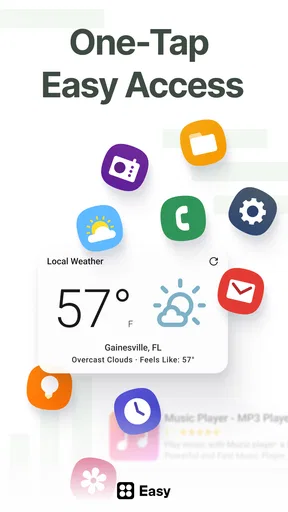
My overall impression is that this is best approached as a collection of small customizations, not as a complete home-screen system. Changing a font or choosing a different icon style can make a device feel less generic, while shortcuts can help put frequently used actions within easier reach. These are modest changes, but they matter when you look at and interact with the same screen throughout the day.
The app has a 4.0 average from around 305,000 ratings, with roughly 27,000 written reviews, and it has passed 10 million installs. That level of adoption suggests that its straightforward premise has found an audience. It does not mean every user will like the same look or find every customization worthwhile; personal taste is especially important in an app whose main purpose is to change the appearance of your phone.
Where the customization feels useful
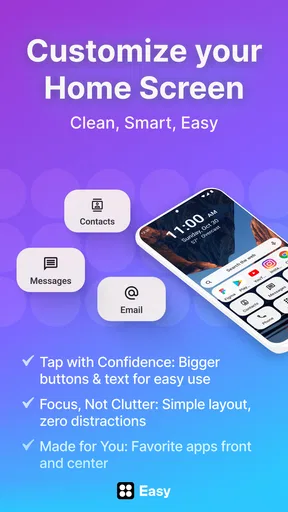
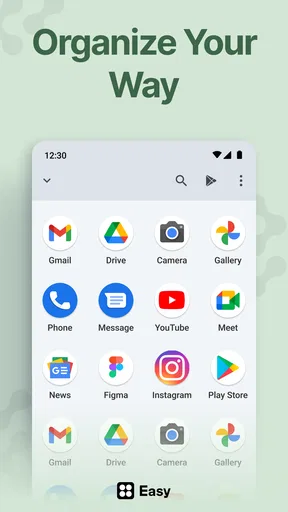
For me, the most convincing reason to use Easy Homescreen is to make the home screen easier to scan, not simply prettier. A consistent visual style can help commonly used icons stand out, and a carefully chosen shortcut can reduce the number of steps between unlocking the phone and doing something routine. The practical benefit depends on restraint: a few deliberate changes are more likely to help than a screen crowded with decorative choices.
One useful approach is to decide what you want the screen to do before changing its appearance. If you regularly lose track of an app among a busy collection of icons, start with a visual adjustment that improves recognition. If your main annoyance is having to navigate through several screens for a repeated action, consider whether a shortcut would solve that particular problem. This makes the customization serve a purpose rather than turning into an open-ended search for a perfect theme.
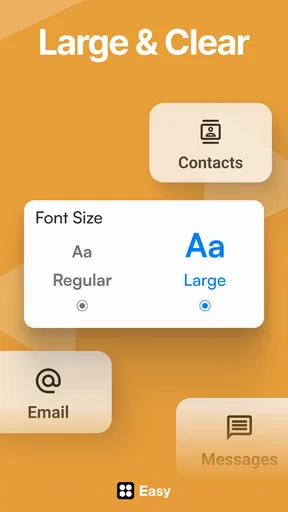
Fonts deserve a similar bit of thought. A style that looks distinctive in a preview may be less comfortable when used across a screen you check dozens of times a day. I would favor a font that stays readable at a glance over one that makes the phone look dramatically different. That trade-off is easy to overlook when personalizing a device: the screen is not a poster, and legibility wins every time you are trying to read something quickly.
Icons are another area where consistency matters more than novelty. If a set makes familiar apps harder to recognize, the home screen may look more coordinated while becoming slower to use. I would make a change, live with it during normal daily use, and then decide whether the visual improvement is worth the extra recognition effort. That small test is more informative than judging an icon style only while browsing customization options.
A realistic everyday workflow
Imagine checking your phone in the morning to open the same few apps, then returning to it during the day for quick tasks. A sensible setup might use a readable font, icons that remain easy to identify, and one or two useful shortcuts. In that situation, Easy Homescreen can help make the home screen feel more intentional without demanding a major redesign. The key is to customize around habits you already have rather than trying to invent a new routine just to use the app.
I would also avoid changing everything at once. If the screen feels less convenient afterward, it becomes difficult to tell whether the font, icon choices, or shortcuts caused the problem. Making one kind of adjustment at a time gives you a clearer comparison with your previous setup. It is a simple workflow, but it helps turn personalization into a practical experiment instead of a string of changes you may later want to undo.
This measured approach is particularly useful for a shared or frequently borrowed phone, where a highly unusual layout might confuse another person. A subtle font or a small number of shortcuts can still make the device feel personal while keeping its basic organization familiar. For someone who uses a phone mostly for quick communication and routine tasks, that balance is often more valuable than an elaborate visual makeover.
What to expect before installing
Easy Homescreen is free to download, but it includes in-app purchases priced from $0.99 to $29.99 per item. I would start with the free experience and decide whether the available customization is enough for your needs before spending anything. The range of possible purchase prices makes it especially sensible to check the value of a specific item for yourself rather than assuming that every extra is necessary.
It is rated for Everyone and was released on January 26, 2023. The current version is 1.10.29, and the stated minimum operating-system requirement is version 9. That gives prospective users a straightforward compatibility point to check against their device. I would make that check before planning a new home-screen setup, particularly if the phone runs an older system version.
There is an important distinction between this kind of customization app and a full replacement launcher. A launcher is generally the better direction for someone who wants to reorganize how the whole home screen works or is looking for extensive control over layout and behavior. Easy Homescreen makes more sense if the goal is smaller cosmetic or convenience changes. If you are already happy with your launcher and only want a slight visual refresh, it may be worth trying before taking on the larger adjustment of switching your everyday interface.
Where the experience may fall short
The biggest limitation is also part of the app’s appeal: its focus is intentionally modest. If you want a deep redesign, highly specific layout controls, or one place to manage every part of the phone’s interface, this is unlikely to replace a more comprehensive launcher. I would not install it expecting an entirely new way to navigate the device. Its strongest case is making selected home-screen details feel more personal or convenient.
There is also a subjective friction to any customization app: browsing options can take longer than the improvement is worth. A new font or icon style may look appealing at first but become tiring in daily use, especially if it reduces readability or makes familiar apps less recognizable. In my view, the best result here is not the most striking one; it is a setup you stop noticing because it fits the way you use your phone.
Another point to keep in mind is that personalization does not automatically improve organization. A shortcut helps only when it leads to something you use often, and a visual change helps only when it makes the screen clearer or more enjoyable for you. Adding choices without a specific purpose can leave the home screen just as cluttered as before. I would treat each adjustment as a small decision with a clear reason, then remove anything that adds decoration without making the phone more comfortable to use.
Those limits make Easy Homescreen a less obvious choice for people who enjoy tuning every detail of their device. If you want extensive control and are willing to spend time arranging your entire interface, a full launcher is likely to be a better fit. If you prefer a clean default screen and have no particular irritation with it, you may not gain enough to justify installing another app. The useful question is not whether customization is possible, but whether a specific change would improve your everyday use.
Who I would recommend it to
I would recommend Easy Homescreen to someone who wants a low-commitment way to personalize a phone, especially if the default font or icon appearance feels dull and a few shortcuts could make regular tasks easier. It is also a reasonable starting point for a person curious about customization who does not want to begin by replacing the whole launcher. Starting with one visible change keeps the process approachable and makes it easier to decide whether this kind of app is worthwhile.
I would be more cautious about recommending it to someone who values deep interface control above simplicity. That person may quickly reach the limits of a focused customization tool and be better served by comparing full launchers. I would also suggest skipping it if the current home screen already feels clear and comfortable. Adding customization for its own sake can create more decisions without solving a real problem.
Easy Homescreen is developed by Homescreen Apps, and its central idea is easy to understand: make a phone’s home screen feel more like yours through selected visual and shortcut changes. I appreciate that focused purpose, but I would keep expectations grounded. It is not a substitute for every kind of interface customization, and the value depends on choosing changes that remain useful after the novelty wears off.
My verdict: Easy Homescreen is worth considering if you want a simple, personal refresh rather than a full interface overhaul. I would try the free version, make one or two purposeful adjustments, and judge them during ordinary phone use before exploring in-app purchases. If those small changes make your home screen more comfortable or easier to scan, the app has done its job; if you want much broader control, a different approach will suit you better.
Pros and cons
Pros
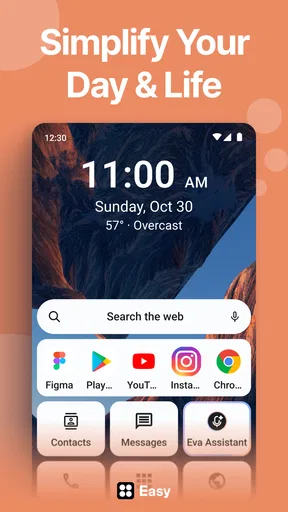
- Simple layout makes common apps easy to find.
- Large icons are helpful for users with limited vision.
- Home screen shortcuts reduce the steps needed to open apps.
- Minimal design keeps the screen easy to navigate.
- A straightforward setup suits users who prefer fewer options.
Cons
- Limited customization may frustrate users who want a personalized layout.
- The simplified design may feel too basic for experienced users.
- Some apps may not fit neatly into the available shortcut layout.
- Users may need time to adjust from their usual home screen.
- Compatibility and features can vary by device and Android version.


